
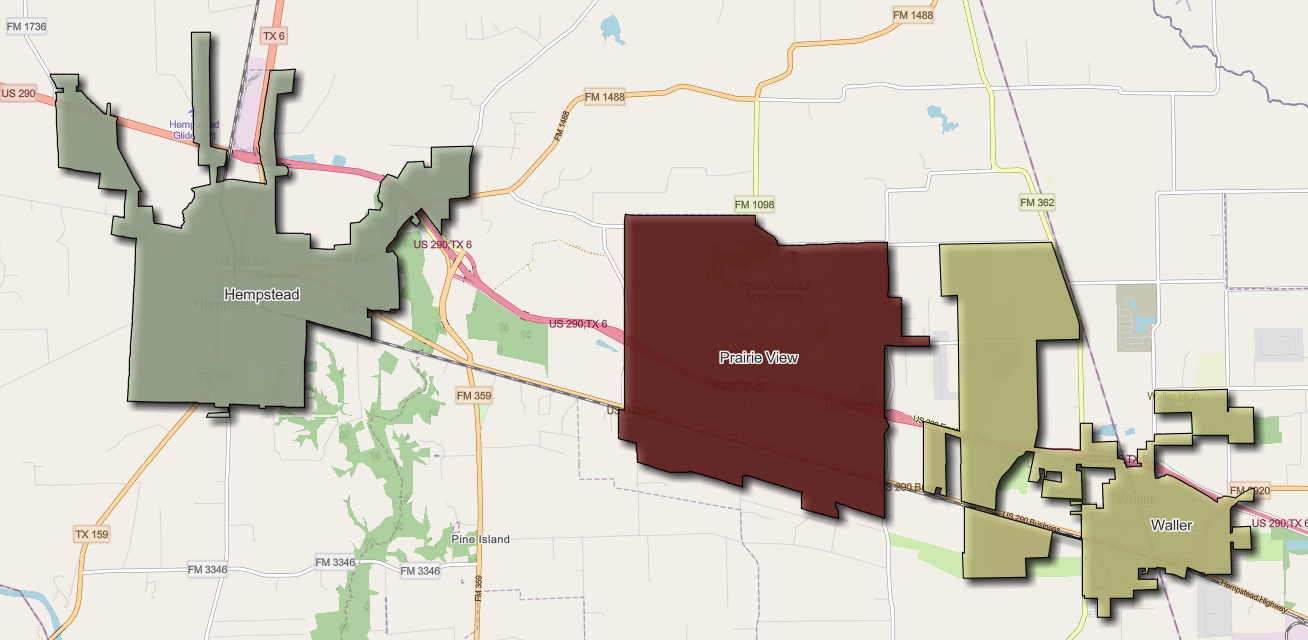
Waller County Health Disparities Assessment
A comprehensive community health assessment integrating public engagement, survey research, and geospatial analysis to identify healthcare access, communication, and infrastructure challenges across rural Waller County.
Waller County's rural communities face unique challenges related to healthcare accessibility, emergency preparedness, internet connectivity, and public communication. Gold Axis supported a CDC-funded health disparities initiative by combining community engagement, resident surveys, demographic research, and geospatial analysis to evaluate barriers affecting public health outcomes. The assessment identified infrastructure gaps, communication challenges, and healthcare accessibility issues while providing data-driven recommendations to improve community resilience and future emergency response planning.
Planning Insights
Community Engagement Revealed Critical Information Gaps
The project placed community engagement at the center of the assessment through public meetings, pop-up events, and bilingual outreach conducted throughout Waller County. Residents consistently identified limited access to reliable public health information, insufficient outreach beyond social media, and a desire for stronger collaboration between local government and community organizations. These conversations provided critical qualitative context that traditional datasets alone could not capture.
Healthcare Access Remains a Rural Challenge
Spatial analysis demonstrated that many residents must travel significant distances to access healthcare facilities, particularly those living outside the county's larger communities. Transportation limitations, combined with the absence of nearby urgent care services, create additional barriers for elderly residents, low-income households, and individuals without reliable transportation. The analysis highlighted geographic inequities that extend beyond traditional demographic measures.
Digital Connectivity Influences Public Health Outcomes
Reliable communication emerged as one of the strongest predictors of public health preparedness. Survey responses and spatial analysis identified limited broadband access and inconsistent internet connectivity as barriers to telehealth services, emergency notifications, and access to reliable health information. These findings reinforced the importance of expanding digital infrastructure alongside traditional healthcare investments.
Data-Informed Recommendations Support Long-Term Resilience
Rather than focusing solely on COVID-19, the assessment produced long-term recommendations designed to improve future public health preparedness. These included expanding healthcare access, strengthening multilingual communication strategies, improving broadband connectivity, addressing transportation barriers, and establishing community health task forces capable of supporting future emergencies. The study provided local leaders with actionable recommendations supported by both quantitative analysis and direct community feedback.
Technical Approach
Gold Axis integrated demographic data, healthcare facility locations, internet connectivity data, community surveys, and stakeholder engagement into a unified geospatial analysis framework. Quantitative survey results were combined with qualitative community feedback and spatial accessibility analysis to identify patterns that would not have been apparent through either method alone. The resulting products transformed community input into decision-support tools that informed recommendations for public health planning, emergency preparedness, and infrastructure investment.