
East End District Consumer Spending & Community Market Analysis
A comprehensive community intelligence assessment supporting the planning of ALMAAHH's proposed 25-acre arts and culture district.
ALMAAHH sought to better understand the demographic, economic, and development conditions surrounding its proposed 25-acre arts and culture district within Houston's East End. Gold Axis conducted a comprehensive community intelligence assessment to evaluate the area's population characteristics, housing market, consumer spending capacity, market trends, and surrounding development activity. The study was designed to provide stakeholders with a data-driven understanding of existing conditions and identify opportunities and constraints that could influence the long-term success of the proposed investment.
Planning Insights
The East End Represents an Emerging Market
The district exhibits characteristics of an emerging market, with moderate household incomes, strong residential occupancy, and growing economic activity occurring alongside areas undergoing transition. These conditions indicate opportunities for strategic investment while highlighting the importance of long-term community planning.
Consumer Spending Continues to Grow
Analysis of resident buying power identified increasing consumer spending across portions of the district, particularly in areas benefiting from nearby economic activity and population growth. The findings suggest opportunities for additional retail and neighborhood-serving commercial investment.
Development Activity is Concentrated Around the District
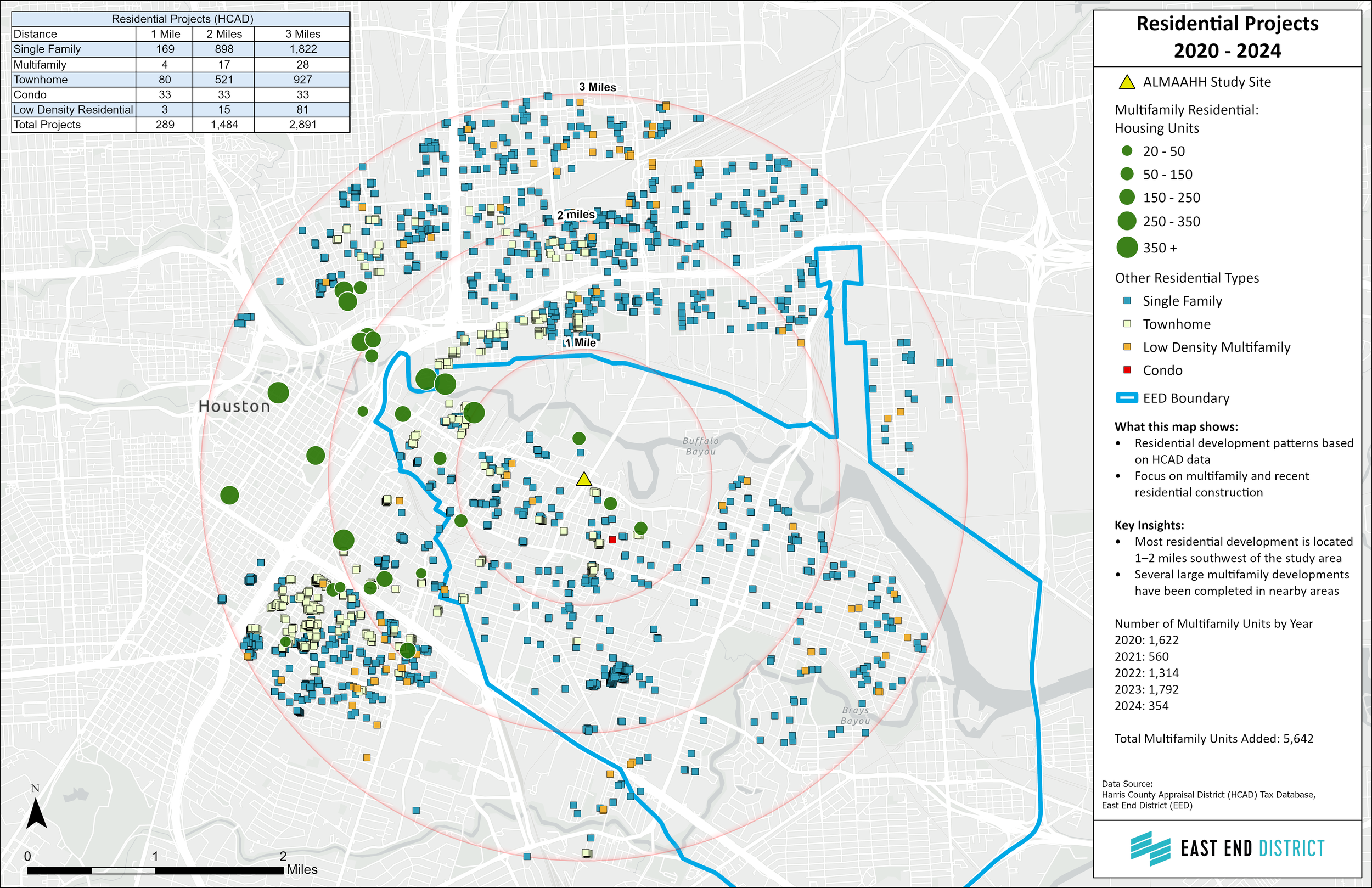
Recent residential and commercial development demonstrates continued investment surrounding the East End. While relatively little large-scale development is occurring inside the district, nearby projects indicate a strengthening regional market that may influence future redevelopment opportunities.
Housing Conditions Support Continued Growth
The East End remains a predominantly renter-occupied community with high housing occupancy rates and active multifamily development nearby. These trends indicate sustained housing demand while emphasizing the importance of balancing redevelopment with neighborhood stability.
Technical Approach
Gold Axis integrated demographic, housing, economic, consumer spending, and development datasets into a unified geospatial analytical framework. Publicly available federal, county, and municipal datasets were processed in ArcGIS Pro to produce planning maps, market classifications, and executive-ready decision support products.